
Landscape Maintenance — Southern California
Landscape Maintenance in the Inland Empire, California
Scheduled care that keeps a finished landscape finished — mowing at the right height, pruning in the right window, and catching an irrigation fault before the plants show it.
What This Covers
The work inside landscape maintenance
-
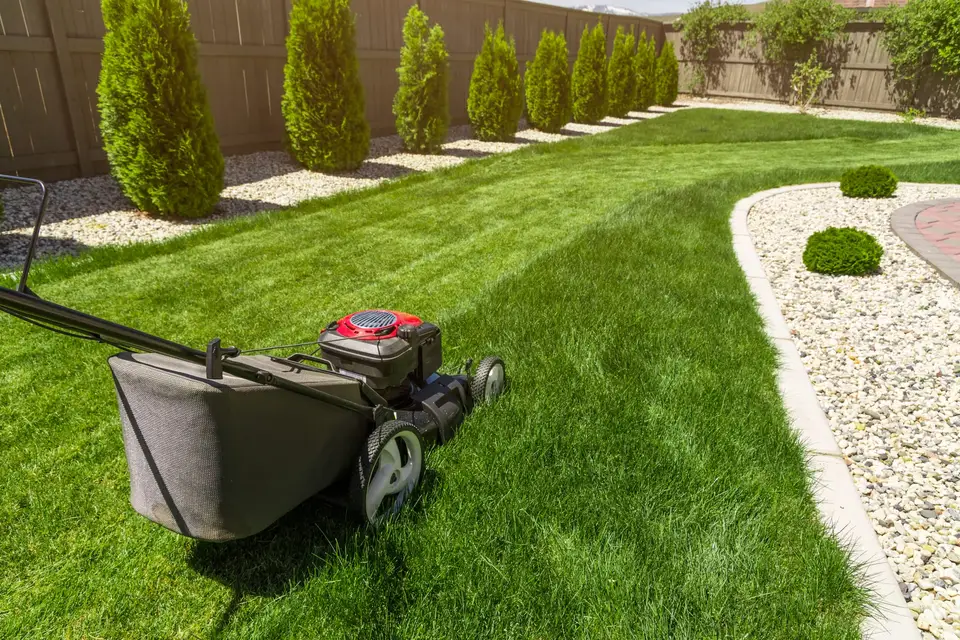
Mowing and edging
Cut at the height the grass type wants, with sharp blades, and only a third of the blade taken at a time so the lawn is not scalped into stress in summer.
-
Pruning and shaping
Structural pruning in each plant’s dormant or post-bloom window — not everything sheared into balls on the same visit, which is how flowering shrubs and natives get ruined.
-
Fertilization and weed control
Feeding on a warm-season or cool-season schedule to match the plants, pre-emergent timed before the weed flush, spot treatment after.
-
Irrigation monitoring
Every visit includes a look for broken heads, dry zones, mist and runoff, and a seasonal adjustment of the controller so it is not running June times in October.
-
Mulch and bed care
Mulch topped up as it breaks down to hold moisture and suppress weeds, beds kept edged and defined.
-
Seasonal and storm clean-up
Leaf drop, Santa Ana wind debris, spent annuals and post-storm cleanup, hauled off rather than blown next door.
How The Job Goes
From first call to done
- 01
Property walk and baseline
We walk the site, note the plant types and their care windows, check the irrigation controller and the condition of turf, beds and trees, and agree on a visit frequency.
- 02
Schedule and scope
A written plan of what each visit covers and what is seasonal — dormant pruning, pre-emergent, fertilization, mulch top-up, controller changeover — so nothing is a surprise.
- 03
Regular visits
Mow, edge, blow, check irrigation, address weeds, and do the pruning that is in season. Debris leaves with the crew.
- 04
Seasonal tasks
Timed work layered onto the regular visits: pre-emergent before the weed flush, feeding for the coming growth period, hard pruning in the dormant window, controller re-set for the season.
- 05
Reporting and flags
You hear about the things that need a decision — a declining tree, a chronic dry zone, a wall starting to lean, a drainage problem showing up in a bed.
- 06
Adjust the plan
Frequency and scope change with the seasons and as a new landscape matures and needs less intervention.
What Decides The Price
Where a quote for this lands
Maintenance is priced per visit against how much skilled time the property takes and how often you want the crew there. What moves it:
Property size and planting complexity
A small lawn with a few shrubs is quick. Mature beds, hedging, roses, fruit trees and detailed borders all take skilled time each visit.
Visit frequency
Weekly keeps a property tight and costs more per month; every other week works for many low-water yards; monthly suits a mostly native, mulched landscape.
Debris volume
Heavy leaf drop, lots of hedging, or a site with big deciduous trees generates green waste that has to be hauled and disposed of.
Turf area
Lawn is the most maintenance-intensive surface per square foot — mowing, edging, feeding, watering. Less lawn is less recurring cost.
Access and site type
A gated back yard, a hillside, or a commercial site with parking-lot islands and a schedule that has to stay clear of business hours all affect the crew time.
Free Estimate
Get a Real Number for Your Maintenance
We look at the actual site, talk through what it needs, and price it in writing. The visit is free and there is no obligation.
Signs You Need This
You’re probably here because
- The yard looked great when it was installed and has slowly lost its shape
- Whoever mows now scalps the lawn and it is brown all summer
- Shrubs are all sheared into the same shape and nothing flowers anymore
- Weeds come back faster than you can pull them
- Nobody is watching the sprinklers and you find breaks by accident
- You manage a commercial property and need a reliable crew on a fixed schedule
Across the Inland Empire
A maintenance calendar built for this climate
The inland Southern California growing season and mild winter mean warm-season grasses want a higher summer mowing height and a feeding schedule that peaks in late spring, while the dormant pruning window for roses and deciduous trees is a short cool stretch in winter. Pre-emergent weed control has to go down before the first warm rain triggers the flush. The biggest recurring save is on the controller: an irrigation schedule left at summer run times through a warm October wastes water and stresses roots, so seasonal adjustment is part of every plan. Santa Ana winds add unscheduled cleanup a few times a year.
Questions Homeowners Ask
Before you call
How often should my landscape be serviced?
It depends on how much lawn and detailed planting you have. A traditional yard with turf and hedges usually wants weekly or every-other-week care. A mature low-water landscape can often be kept sharp on a monthly visit plus seasonal tasks.
Do you haul the green waste or leave it?
It leaves with the crew and goes to green-waste recycling. Blowing debris into the street or a neighbor’s yard is not maintenance.
Can you take over a landscape someone else installed?
Yes. We start with a walk to learn the plant types and their care windows, check the irrigation, and build a schedule around what is actually planted rather than a generic cut-and-blow.
Do you service commercial and HOA properties?
Yes, on a fixed schedule with reporting. Common-area turf, parking-lot islands, entry planting and irrigation monitoring are all part of a commercial scope.
Related Work
Often part of the same project
Free Estimate
Ready to Talk Maintenance?
Call and you’ll reach someone who does the work. Or send a few details and we’ll come take a look.