
Irrigation & Drip Systems — Southern California
Irrigation & Drip System Repair in the Inland Empire, California
New drip and spray zones, controller upgrades, and leak diagnosis — the difference between a yard that survives an inland August and a water bill that doubles.
What This Covers
The work inside irrigation & drip systems
-
Drip conversion for beds
Spray heads in shrub and perennial beds swapped for inline or point-source drip, which puts water at the root instead of on the fence and the sidewalk.
-
Spray and rotor zones for turf
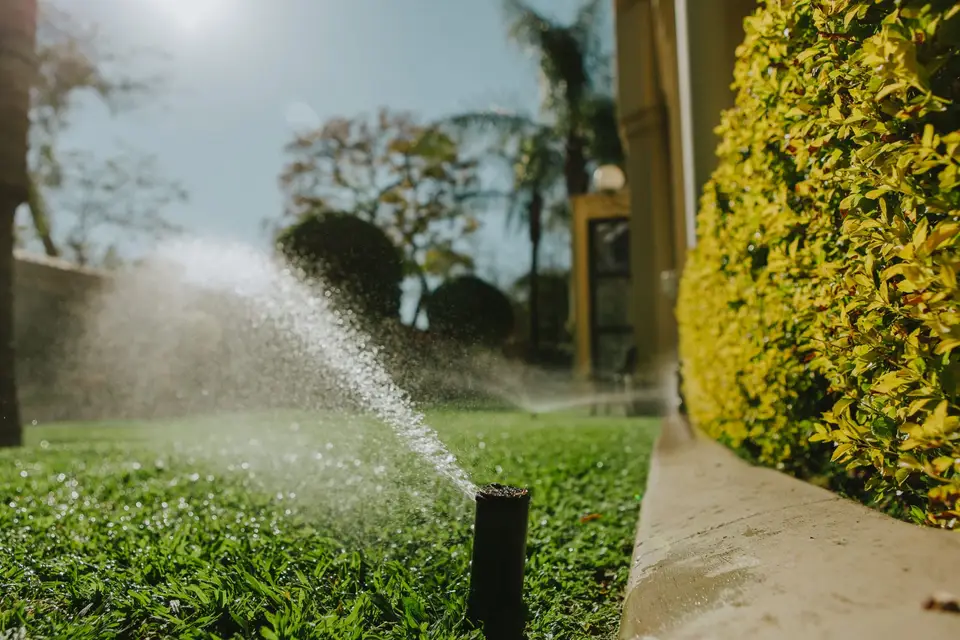
Where lawn stays, matched-precipitation nozzles or rotary heads on correct spacing so one pass covers evenly instead of leaving dry arcs.
-
Smart controller install
A weather-based or soil-moisture controller that adjusts run times to the season automatically — required on larger permitted projects and the single biggest water saver on most systems.
-
Valves, manifolds and mainline
New anti-siphon or in-line valves, rebuilt manifolds, and PVC or poly mainline repairs.
-
Backflow and pressure
Backflow assembly testing and replacement, plus pressure regulation where high street pressure is atomizing the spray into mist.
-
Leak and dead-zone diagnosis
Tracking a spike on the water bill to a cracked lateral, a weeping valve, a chewed drip line or a controller stuck on a program.
How The Job Goes
From first call to done
- 01
System check
We run every zone, watch the whole cycle, and note broken heads, mist, low pressure, overspray, tripped or weeping valves, and what the controller is actually set to.
- 02
Find the real problem
A high bill can be a controller running a forgotten second start time, a valve that will not fully close, or a break underground. We isolate it before quoting a fix.
- 03
Scope and options
Straight repair, zone-by-zone drip conversion, or a controller swap — with the water and plant-health trade-offs of each laid out.
- 04
Shut down and dig
Water off at the meter or the mainline, DigAlert marked for any trenching, and only the sections that need opening get opened.
- 05
Install and plumb
New valves on unions so the next repair is quick, drip laid on grid or looped around plants with emitters sized to each plant’s water use, spray zones re-nozzled to match.
- 06
Controller and programming
Smart controller mounted and connected, zones named, and a seasonal schedule set — plus a walk-through so you can adjust it yourself.
- 07
Pressure test and tune
Full cycle run again, heads adjusted to stop watering hardscape, drip checked for blowouts, and the schedule left on a sensible starting point.
What Decides The Price
Where a quote for this lands
Irrigation work ranges from a half-hour head swap to re-plumbing a whole system zone by zone. What moves it:
Repair versus conversion
Replacing a few heads and a valve is a small job. Converting spray beds to drip across a whole property, with new valves and a controller, is a system upgrade.
How buried and how old
Shallow poly line in a mulched bed is easy. A break under a paver patio, a driveway or mature roots takes far longer to reach.
Controller choice
A basic timer, a Wi-Fi weather-based controller and a full soil-moisture system are three different price points, and only the smarter two cut water meaningfully.
Valve count and condition
More zones means more valves. A corroded manifold that has to be rebuilt from the mainline out is more than a single valve swap.
Backflow work
If the backflow assembly fails its test or is missing, replacing it to code is its own line and in some cases needs a permit.
Free Estimate
Get a Real Number for Your Irrigation & Drip
We look at the actual site, talk through what it needs, and price it in writing. The visit is free and there is no obligation.
Signs You Need This
You’re probably here because
- Your summer water bill is far higher than winter and you cannot see why
- Some plants are always dry while others are waterlogged
- Heads spray the sidewalk, the fence or the house wall
- A patch of lawn or a bed stays brown no matter how long the zone runs
- The spray looks like fog and drifts away on the wind
- You have a new controller box but never trust the schedule
Across the Inland Empire
Watering against an inland evapotranspiration rate
The inland Southern California summer pulls moisture out of soil and leaves fast — the reference evapotranspiration here is high, which is why a fixed schedule set in spring is drowning plants by June and starving them by September. A weather-based controller tracks that curve and is the reason California’s water ordinance requires one on qualifying projects. Drip in the beds keeps water off paving and out of the wind, where inland spray loses a real fraction to drift and evaporation before it lands. Backflow prevention is required where irrigation ties to potable water, and assemblies are tested on a schedule.
Questions Homeowners Ask
Before you call
Will switching to drip actually lower my bill?
Usually yes, often noticeably, because drip cuts evaporation, wind drift and runoff and puts water only where plants are. Pairing it with a weather-based controller is where the biggest savings come from.
My controller is new but the yard still looks bad. Why?
A smart controller only helps if the zones themselves are sound. Broken heads, mixed nozzle types on one zone, low pressure or a partly closed valve will defeat any controller. We check the hardware first.
Can you find a leak without digging up the whole yard?
Most of the time. Zone-by-zone pressure behavior, meter readings with everything off, and where water surfaces or stays green usually narrow it to a short section before anything is opened.
Do I need a permit for irrigation work?
Routine repairs and drip conversions do not. Replacing or adding a backflow assembly, or running a new dedicated circuit for a controller, can. Larger new or rehabilitated landscapes hit the state water-ordinance plan check.
Related Work
Often part of the same project
Free Estimate
Ready to Talk Irrigation & Drip?
Call and you’ll reach someone who does the work. Or send a few details and we’ll come take a look.